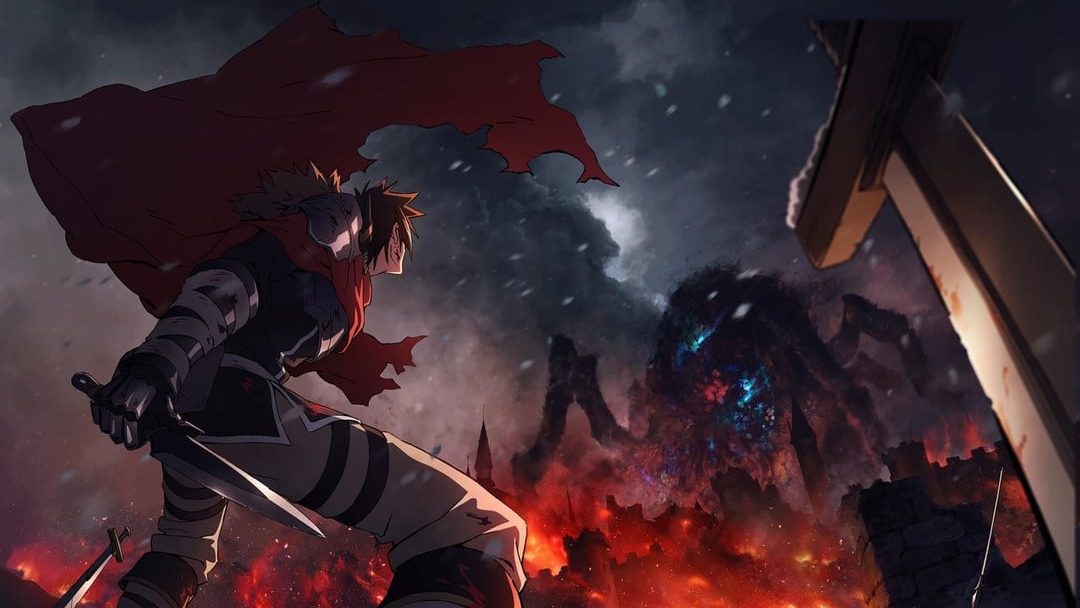
Most modern anime are patient to a fault.
Worlds are explained before they’re lived in. Rules are outlined before they’re tested. Characters announce who they are long before they’re allowed to behave like real people. The result is always familiarity without grounding and a setting that feels legible but not quite tangible, something that Sentenced to Be a Hero does the exact opposite of.
From its opening moments, the series refuses orientation. There is no lecture, no omniscient narrator, no easing the audience into its logic. Instead, it drops the viewer into a system already long in motion and one that treats heroism not as aspiration, but as punishment. The effect is immediate. You’re not watching a premise unfold; you’re arriving late to a world that doesn’t care whether you understand it yet. This is the same instinct that once defined A Game of Thrones. That series didn’t begin by explaining its politics, magic, or moral framework. It began by showing people doing their jobs within it, which effectively guarded borders, enforced laws, made compromises. Sentenced to Be a Hero adopts this philosophy wholesale, and it’s why its first episode feels unusually confident.
The familiarity it offers is deliberate but subverted. On the surface, the building blocks are recognizable: a fantasy setting, institutional power, the promise of combat, demons and demon lords. But instead of romanticizing the role of the hero, the show reframes it as a sentence meant to be served out in obligation enforced by the state. Glory is absent. Survival is conditional. Advancement is not a reward, but a recalibration of risk. This single choice does more worldbuilding in minutes than many series accomplish in seasons.
By treating heroism as labor rather than destiny, the show immediately grounds its characters in the tragedy that they aren’t chosen. They’re assigned. They don’t fight because they believe, they fight because refusal isn’t an option. This creates an emotional realism that cuts through genre expectation. Characters speak cautiously. Trust is transactional. Loyalty is fragile. You understand who these people are not because they tell you, but because the system constrains every decision they make.
Like A Game of Thrones, the series understands that immersion comes from consequence. Actions ripple outward, authority is impersonal, institutions outlast individuals, no one is protected by narrative importance, and the world itself doesn’t pause to honor intention. What makes Sentenced to Be a Hero stand out among its peers is not just its premise, but its discipline. The first episode resists spectacle in favor of texture. It prioritizes tone over explanation. It trusts the audience to observe, infer, and acclimate. And in doing so, it achieves something rare in modern anime: the feeling that the world existed before the story began and will continue after it ends.
Instant immersion isn’t about speed. It’s about confidence. Sentenced to Be a Hero knows exactly what kind of story it’s telling, and it wastes no time convincing you to keep up. Like the best genre fiction, it doesn’t ask for patience. It earns attention by assuming intelligence.
And in an industry increasingly reliant on familiarity without friction, that alone makes it worth studying.
 The Vacancy
Leave a comment